These four configurations are selected for the Novosibirsk market because they address the practical variables that decide packaging uptime: heavy bag weight, stand-up pouch stability, vertical film control, and continuous high-speed sealing. Each product link preserves the original product URL and opens the detailed specification page.

Reinforced vertical sealing for heavy paper-plastic bags and demanding Siberian distribution formats.
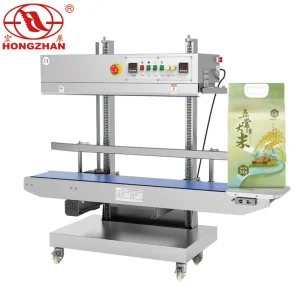
Stand-up pouch stability for retail-ready foods, powders, and consumer goods.

Big-bag and vertical film sealing for bulk production and industrial packaging.

High-speed plastic bag sealing for continuous line throughput.
Serious buyers compare more than price. They compare uptime, energy behavior, film compatibility, spare-part access, documentation quality, and remote technical support. The indicators below frame the non-negotiables for Novosibirsk packaging projects.
Novosibirsk is not simply a remote destination on a shipping quotation. It is the largest city in the Asian part of Russia, one of the country's most important scientific and industrial centers, and a logistics gateway for the Siberian Federal District. Its position on major rail and road corridors gives the region a role that extends beyond local consumption: Novosibirsk functions as a distribution and processing node for food, beverages, pharmaceuticals, chemicals, construction materials, and everyday consumer goods.
That industrial profile changes the way packaging machinery should be evaluated. A continuous band sealing machine in Novosibirsk may operate across dairy and meat packaging, bakery and snack production, pet-food lines, pharmaceutical blister or pouch support areas, chemical powder bags, and e-commerce fulfillment. The machine must therefore be matched not only to bag size, but also to film structure, product dust, ambient temperature, operating voltage, operator language, and spare-part strategy.
The local commercial environment has also become more technical. Buyers in Novosibirsk and the wider Siberian region increasingly ask for film trials, documentation packages, remote commissioning, and spare-part kits before they approve a purchase. This is a healthy shift for manufacturers and exporters: it rewards suppliers who can provide information gain, engineering clarity, and genuine after-sales readiness instead of a one-dimensional price offer.
Dairy, meat, bakery, beverage, frozen, and shelf-stable producers need repeatable seal integrity, clear date coding, and fast changeover between retail formats.
Barrier films, aluminum foil structures, batch coding, traceability, and dust control make machine selection more demanding than basic food sealing.
Stand-up pouches, pet food, snacks, and consumer packaged goods reward compact, high-throughput sealing cells with clean operator workflows.
Global buyers are moving away from simple price comparisons and toward total cost of ownership. For a Novosibirsk line, the real cost of a sealing machine includes installation time, operator learning, film waste during ramp-up, spare-part availability, energy behavior, and the ability to solve problems without waiting weeks for an on-site visit. Exporters that provide clear technical documentation, remote diagnostics, and modular accessories are better positioned than suppliers that offer only a base machine.
Illustrative priority index based on buyer discovery criteria for export-oriented packaging projects. It is not a statistical market forecast.
A continuous band sealer rarely operates in isolation. The strongest solution is designed around the product, the pouch, the operator, and the maintenance model.
Best for small and mid-volume producers that need a reliable sealing station without rebuilding the entire line. Vertical and horizontal options support bags, pouches, aluminum foil, and paper-plastic formats. A standalone cell is also practical for contract packers and e-commerce fulfillment teams.
For larger Novosibirsk projects, sealing should be evaluated together with filling, capping, labeling, and coding. Integrated lines reduce manual handling, improve traceability, and create a single point of responsibility for commissioning and technical support.
Fresh meat, dairy, frozen foods, and pharmaceutical formats require attention to condensation, film tension, sealing temperature, and cooling. A machine that performs well in a warm room may need different warm-up and temperature-stabilization procedures in a Siberian winter.
Buyers should not be forced into a dead-end purchase. Modular accessories such as pouch stands, date coders, conveyors, and upgraded controls allow a sealing cell to grow with demand while protecting the original investment.
Localization is not a translation sticker. It is an engineering and service discipline. For Novosibirsk, a credible exporter should clarify the electrical environment, climate conditions, documentation package, operator training route, and spare-part plan before the machine leaves the factory. Compliance remains a shared responsibility: the exporter supplies technical information, while the importer and accredited local authority confirm the applicable certification pathway.
Confirm 220V single-phase or 380V three-phase supply, 50Hz frequency, plug type, surge protection, and control-circuit compatibility. Electrical clarity prevents commissioning delays and nuisance tripping.
Plan warm-up time, condensation control, belt tension checks, suitable lubricants, and stable room temperature before production. Cold start procedures should be written into the operator checklist.
Bilingual quick-start guides, visual fault trees, and Russian-language operator labels can be prepared with buyer-approved translation. Training should cover threading, temperature setting, cleaning, and emergency stop behavior.
Technical files, drawings, material declarations, and operating information can be organized to support the importer's EAC conformity process. Final scope, marking, and customs classification must be confirmed by the importer and an accredited authority. Applicable technical regulations may include machinery safety and packaging-related requirements depending on the final configuration.
A first-order spare kit should include heater bands, Teflon belts, silicone pressure rollers, cooling blocks, fuses, sensors, and commonly replaced fasteners. This single step can prevent weeks of downtime.
A structured remote process uses video, photos, temperature logs, and checklists to verify installation and sealing quality. Clear escalation rules help Novosibirsk teams coordinate with the factory across time zones.
The next four configurations address date coding, aluminum and plastic bag structures, fresh-meat packaging support, and cost-controlled automatic sealing. They are retained with the original product URLs for full specification review.
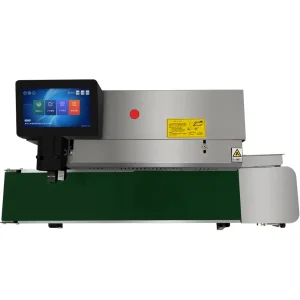
Expiry-date printing integrated with continuous bag sealing for traceability.
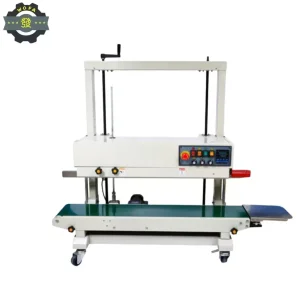
Versatile plastic and aluminum bag sealing for food and PE formats.
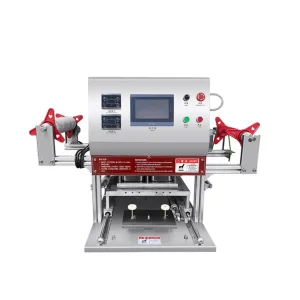
Vacuum capping and fresh-meat packaging support for cold-chain operations.

Low-cost automatic band sealing for scalable entry-level production.
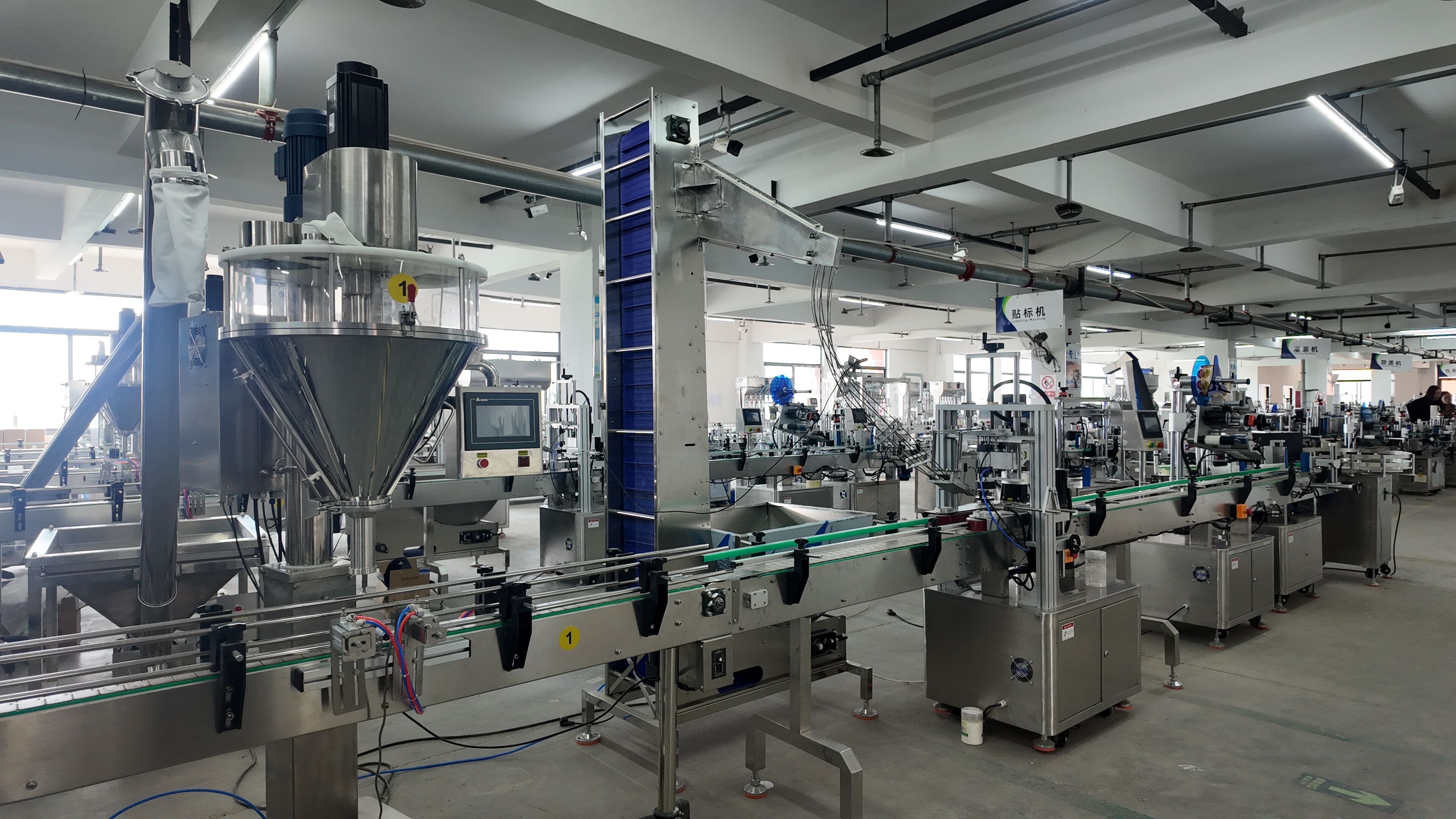
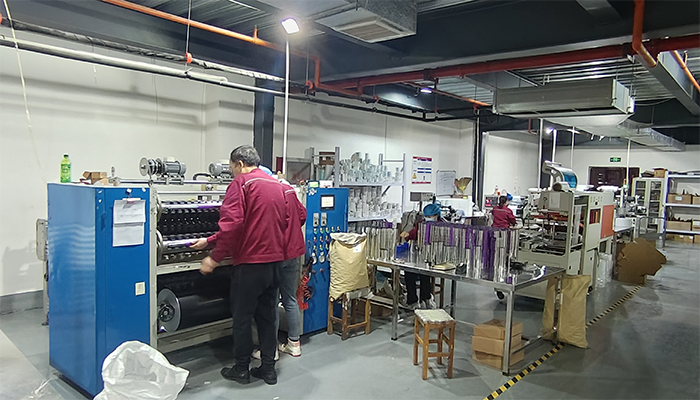
Guangzhou Seltrion Packaging Co., Ltd. is a professional packaging machinery manufacturer specializing in integrated solutions for labeling, filling, capping, sealing, and coding & marking systems. Located in Guangzhou, China, the company serves a wide range of industries including food and beverage, pharmaceuticals, cosmetics, chemicals, and daily consumer goods.
Seltrion offers a comprehensive portfolio of automated packaging equipment, including high-speed labeling machines, precision filling systems for liquids, powders, and pastes, reliable capping machines, and advanced sealing solutions. In addition, the company provides coding and marking systems to ensure clear product identification, traceability, and compliance with industry standards.
With a strong focus on innovation and efficiency, Seltrion integrates intelligent control systems and modular design to support flexible production lines and improve operational productivity. Its solutions are tailored to meet diverse customer requirements, from standalone machines to complete turnkey packaging lines.
Committed to quality and customer satisfaction, Guangzhou Seltrion Packaging Co., Ltd. adheres to strict manufacturing standards and provides full technical support, including system design, installation guidance, and after-sales service. The company aims to help global clients enhance packaging efficiency, reduce costs, and achieve consistent, high-quality production outcomes.
Share your bag size, film structure, target speed, voltage, and operator language. We will map the request to a suitable continuous band sealing machine and document the supporting requirements.
The next competitive advantage in continuous band sealing will not come from adding more buttons. It will come from cleaner data, faster changeover, better film compatibility, and service models that reduce downtime across Siberian distances.
Prioritize digital temperature control, repeatable sealing pressure, date coding, power protection, bilingual quick-start guidance, and a practical spare-parts kit. These fundamentals deliver faster return on investment than advanced features that operators cannot use.
Expect stronger demand for OEE dashboards, remote diagnostics, servo-driven sealing, recipe management, and film-compatibility databases. Connected machines will help Novosibirsk teams verify performance without relying only on periodic site visits.
Vision inspection, AI-assisted defect detection, predictive maintenance, digital-twin commissioning, and recyclable-film adaptation are likely to mature. AI should remain an enabler: every seal still needs physical validation against the product, film, and operating conditions.
These questions reflect the practical concerns that appear in real export projects involving Siberia, film trials, compliance files, and remote technical support.
A continuous band sealer uses a moving band and constant heat to produce a steady stream of sealed bags, making it well suited to production lines and higher throughput. An impulse sealer applies heat for a controlled cycle and is often used for lower-volume or thicker bag tasks. For Novosibirsk food, retail, and e-commerce operations, continuous band sealing usually offers better repeatability when matched to the correct film.
There is no single universal model. The correct choice depends on bag format, film structure, throughput, and available floor space. For cold-season reliability, buyers should request warm-up procedures, condensation-control guidance, stable temperature verification, and a first-order spare kit. Vertical heavy-duty models may suit large bags, while horizontal or stand-up pouch configurations may suit retail formats.
Electrical configuration must be confirmed at quotation stage. Buyers should provide voltage, phase, frequency, plug type, and any factory protection requirements. For Novosibirsk, 220V and 380V options may be relevant depending on the machine and the facility, but the final configuration must be documented before shipment.
The exporter can support the technical file with drawings, descriptions, material declarations, and operating information. However, certification scope and final approval depend on the importer, the customs classification, and the accredited local authority. Buyers should confirm the applicable technical regulations before placing a production order, and should not treat general documentation as a substitute for formal certification.
Common materials include polyethylene, polypropylene, laminated films, aluminum foil structures, paper-plastic bags, and selected stand-up pouch formats. Performance varies by film thickness, coating, barrier layer, and sealing temperature window. Film trials or sample testing are strongly recommended before a line is specified.
A practical first kit usually includes heater bands, Teflon belts, silicone pressure rollers, cooling blocks, fuses, sensors, and fasteners. The exact list depends on the model and operating intensity. For Novosibirsk, where air freight or rail replenishment can add time, a planned spare kit is a low-cost way to protect uptime.
A structured process begins with pre-shipment photos, wiring checks, and a commissioning checklist. After arrival, the local team shares video, temperature readings, and sealing samples. The factory then verifies settings, identifies mechanical or operational issues, and escalates to engineering when needed. Clear time-zone coordination and named contacts improve the outcome.
Vertical machines are often used for bags that need to stand or be fed in a vertical orientation, including large bags and certain pouch formats. Horizontal machines are common for flat bags, pouches, and products that lie flat. The decision should be based on the product, bag geometry, desired speed, operator ergonomics, and available line space.
Yes. The strongest approach is to define the full packaging workflow before selecting individual machines. Filling, capping, labeling, sealing, and coding all affect each other through product flow, speed, and operator intervention. A turnkey or modular line design can reduce manual handling and improve traceability.
Provide bag or pouch dimensions, material structure, product weight, target speed, voltage and frequency, available air supply if required, operator language, destination city, and any compliance expectations. Photos or samples of the current package are especially useful for matching the right continuous band sealing machine configuration.
This final selection completes the full catalog. The eight configurations below cover horizontal pouch sealing, aluminum-foil sachets, floor-type coding integration, induction sealing, stainless-steel hygienic sealing, automatic plastic-bag sealing, and large pet-food or snack bag formats.

Digital temperature control for repeatable horizontal pouch sealing.

Vertical aluminum-foil and sachet sealing for multi-format lines.
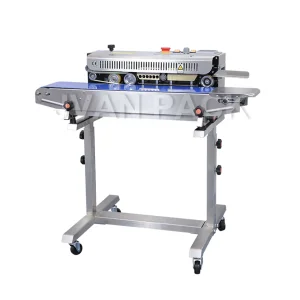
Floor-type sealing with expiry-date inkjet printing for traceability.
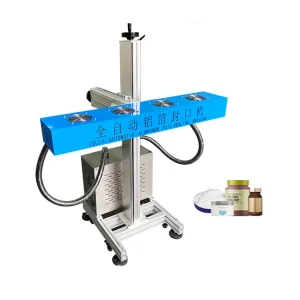
Electromagnetic induction sealing for bottles and aluminum foil.

Aluminium-plastic bag sealing for barrier packaging.

Automatic band sealing for flexible plastic-bag operations.

Stainless-steel horizontal sealing for hygienic environments.

Large pet-food and snack bag sealing for high-volume retail.
 Selltrion Packaging