How does filling equipment ensure accuracy? The answer begins with controlled volume, mass, pressure, and timing. Modern fillers combine servo drives, load cells, flow meters, and programmable logic controllers. These systems monitor every container, not merely the first sample. A 0.5-gram variation can matter when products are expensive or tightly regulated.
Deloitte’s 2023 Smart Manufacturing and Operations Survey found that 86% of manufacturing leaders expect smart manufacturing to drive competitiveness within five years. This supports wider use of connected sensors and real-time process data. The International Society for Pharmaceutical Engineering also emphasizes continued process verification, where equipment performance remains under review throughout production. Accuracy is therefore a system outcome, not a machine setting.
Dr. W. Edwards Deming, a leading quality expert, said, “Quality comes not from inspection, but from the improvement of the production process.” His principle applies directly to filling lines. Calibration, nozzle design, product temperature, viscosity control, and clean changeovers all influence results. Operators still matter. They verify trends, investigate drift, and challenge suspicious readings.
The details are visible. A stable liquid stream enters each bottle. A load cell confirms the target weight. Software rejects an outlier before packaging continues. Still, sensors can drift, products can foam, and assumptions can fail. No filling system is perfectly accurate. The stronger question is whether it detects uncertainty quickly, records evidence clearly, and supports corrective action. This guide examines those practical controls and explains how filling equipment turns measurement into dependable production accuracy.
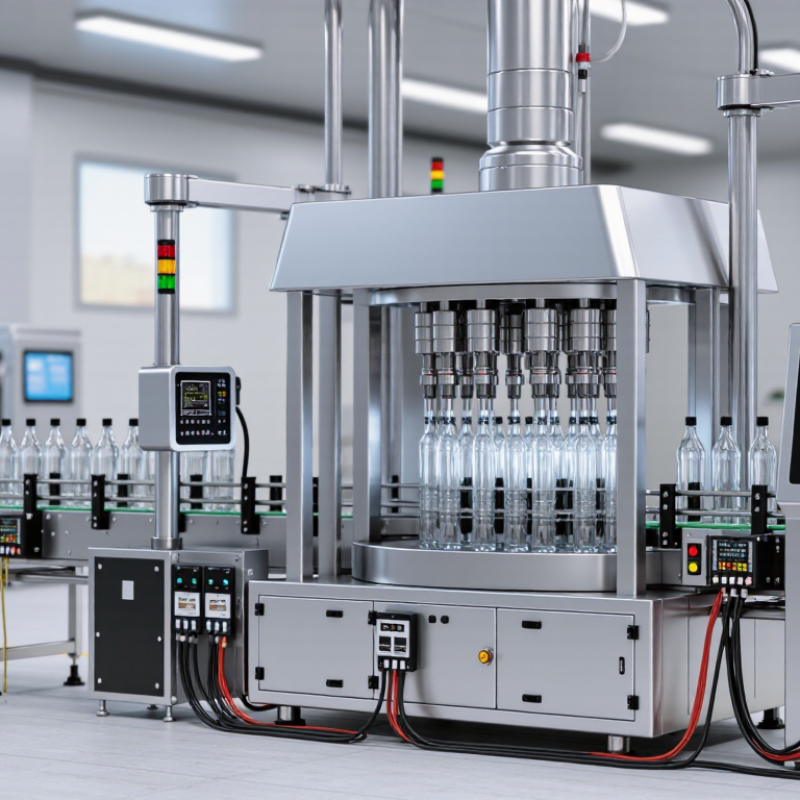
How Does Filling Equipment Ensure Accuracy?
What Accuracy Means in Filling Equipment
Accuracy means delivering the intended amount, not simply filling every container quickly. A 500-gram target may allow only a small variation. That variation should be defined before production begins. Repeatability matters too. The machine should produce similar results across many containers. In practice, accuracy depends on product viscosity, temperature, container shape, and filling speed. A thick lotion may leave a tail after the nozzle closes. A thin liquid may drip or splash. These details affect the final weight.
Reliable equipment uses calibrated sensors, controlled pumps, and consistent timing. Operators should check sample containers during each production run. They can compare measured weight with the target and record the results. Calibration should be verified, not assumed. A clean nozzle also matters. Residue can change the next fill slightly. No filling system stays perfect under every condition. That is an uncomfortable truth. Settings that work today may need adjustment tomorrow. Good teams review trends instead of trusting one successful test.
Tips: Define an acceptable tolerance before filling starts. Weigh several samples, not just one. Check the first containers, middle containers, and final containers. Watch for dripping, foam, or uneven settling. Record product temperature and machine settings. If results drift, pause and investigate. A small measurement mistake can become a large production problem. Experienced operators learn from these inconsistencies and improve the process over time.
What Accuracy Means in Filling Equipment
Filling accuracy is measured by comparing the target fill volume with the average measured volume. In this 30-fill validation example for each size, all average results remain within ±1% of the target. Accurate equipment controls dosing time, flow rate, pressure, and shut-off timing to reduce variation between individual fills.
In modern filling equipment, sensors turn each container into a measurable process. Volume sensors monitor liquid levels, while load cells detect product weight during filling. This measurement happens within fractions of a second.
A level sensor may use pressure, ultrasound, or changes in electrical signals. It checks whether the product reaches the target height. However, foam, bubbles, and uneven surfaces can confuse the reading.
A load cell measures the container before, during, and after filling. The controller compares these values with the programmed target. If the weight rises too quickly, the valve can close earlier.
Small errors matter. Temperature can change liquid density, so the same volume may produce a different weight. Vibration from nearby machinery can also disturb load-cell readings. Experienced operators often watch the live values, not only the final report. They check empty containers, inspect sensor cables, and repeat calibration during production changes. Calibration is not optional.
No sensor remains perfect forever. Dust, moisture, product buildup, and mechanical wear can slowly reduce accuracy. A practical system should record measurements and flag unusual variations. Still, operators should question automatic corrections instead of accepting every adjustment. A sensor may be precise but poorly positioned. That detail is easy to miss. Regular testing with verified weights and controlled volumes helps reveal the difference.
Modern filling accuracy depends on a closed-loop control system. A flowmeter, load cell, or level sensor measures each fill in real time. The controller compares that reading with the programmed target. It then adjusts pump speed, valve timing, or filling pressure. This correction happens within milliseconds on many automated lines. Operators can also set tolerance limits, reject underfilled containers, and record batch data. Deloitte’s 2023 Global Smart Manufacturing Survey found that 86% of manufacturers expect smart manufacturing to remain important for competitiveness. That shift places greater pressure on reliable measurement and control.
In practical operation, accuracy can change when product temperature, viscosity, or foam levels move. A recipe may work at 20°C, then drift at 25°C. Control software should compensate, but imperfect sensors still create risk. Calibration records, alarm histories, and sample checks help technicians find the real cause. FDA process-validation guidance also stresses documented, repeatable process control. Data alone does not guarantee quality. Poorly placed sensors can mislead an excellent controller.
Tips: Keep sensors close to the filling point. Verify calibration before production. Review fill-weight trends, not only individual failures. Test alarms during maintenance, because silent warnings are dangerous. Leave a small tolerance window, but challenge it regularly. A wider limit may reduce rejects while hiding gradual drift.
Accurate filling depends on more than a programmed volume. In hands-on production work, nozzles and valves often decide whether each container receives the correct amount. A well-designed nozzle creates a steady stream and limits dripping after filling. Its tip should match the product’s thickness, temperature, and container opening. For example, a narrow nozzle can reduce splashing in a small bottle, while a wider opening may suit thicker materials. Small leaks matter.
Valves control when flow starts and stops. Pneumatic, servo, and diaphragm valves can provide precise movement when correctly adjusted. Their response time must match the filling speed. If a valve closes too slowly, excess product may remain on the nozzle or enter the container. If it closes too quickly, the flow can become uneven. Regular inspections should check seals, air pressure, and residue around moving parts. Clean equipment performs more consistently, although perfect results are never guaranteed.
Tips: Keep the nozzle centered above each container. Record fill weights during setup and after changeovers. Test several containers, not just one. Do not trust an old calibration setting without verification. Temperature changes can alter viscosity and flow, so operators should review results throughout the shift.
Accurate filling begins with reliable calibration. Operators compare each fill against a traceable scale, test vessel, or certified volume standard. They record the target weight, actual result, product temperature, and equipment settings. Small differences often reveal larger problems. A pump may be wearing, or a nozzle may be partially restricted.
Calibration should match real working conditions. A machine handling warm liquid may perform differently after cooling overnight. For this reason, experienced technicians test several cycles before production begins. They also check low, middle, and high fill volumes. One successful test is not enough. That lesson is easy to forget.
Maintenance protects the accuracy calibration measures. Technicians inspect seals, valves, hoses, and nozzle tips for wear or residue. They clean contact surfaces carefully, because a thin buildup can change flow speed. Loose fittings can create air pockets and unstable fills. During routine checks, teams should compare recent records with older results. A gradual drift may be more important than one unusual reading.
Good documentation supports dependable decisions. Each adjustment should include the date, technician, equipment condition, and verification result. Still, procedures are not perfect. Human reading errors and rushed inspections can remain hidden. Independent checks, clear training, and scheduled recalibration reduce that risk. Accuracy is preserved through repeated attention, not a single certification.
| Control Dimension | What Is Checked | Typical Verification Method | Recommended Frequency | Typical Acceptance Target | Maintenance or Calibration Action | Effect on Filling Accuracy | Risk if Neglected |
|---|---|---|---|---|---|---|---|
| Fill-volume calibration | The actual volume delivered by each filling head compared with the programmed setpoint. | Collect a defined number of fills in calibrated volumetric glassware or weigh the product and convert mass to volume using its measured density. | At commissioning, after changeovers, and at a risk-based interval such as monthly or quarterly. | Mean result within the approved process tolerance; repeatability confirmed across all heads. | Adjust piston stroke, pump timing, servo position, or dosing parameters, then repeat the verification. | Corrects systematic overfill or underfill caused by incorrect dosing settings. | High — consistent giveaway, short fills, or nonconforming product. |
| Gravimetric scale calibration | Accuracy of the load cell, checkweigher, or weighing vessel used to confirm fill weight. | Use traceable test weights covering the normal operating range, including zero, mid-range, and near-capacity points. | Before production, after relocation or impact, and at a documented interval based on risk and equipment stability. | Indication remains within the scale manufacturer's approved error limit at each test point. | Zero the scale, level the platform, remove vibration sources, and perform adjustment or service when required. | Provides a reliable feedback signal for weight-based filling and statistical process control. | High — incorrect decisions may be made from false weight readings. |
| Nozzle drip and shut-off inspection | Whether product continues to flow after the fill cycle has ended. | Observe the nozzle after shut-off and measure any accumulated leakage over a defined number of cycles. | At start-up, after product changeover, and whenever fill weights begin to drift. | No visible drip and no measurable leakage that affects the approved fill tolerance. | Clean the nozzle, inspect seals, replace worn valve components, and verify air or actuator pressure. | Prevents product loss after the programmed dose and reduces variation between containers. | Medium — can create overfill, contamination, and inconsistent net contents. |
| Pump and piston condition | Wear, scoring, seal condition, and smooth movement of the dosing mechanism. | Inspect components, compare cycle output, and check for pressure instability or product bypass. | During scheduled preventive maintenance and whenever output variation increases. | Stable output with no visible leakage, abnormal pressure fluctuation, or damaged sealing surfaces. | Replace seals, inspect cylinder surfaces, lubricate approved components, and verify stroke repeatability. | Maintains consistent displacement and prevents dose loss caused by internal leakage. | High — worn components can cause progressive underfilling and variation. |
| Air-pressure stability | Pressure supplied to pneumatic valves, actuators, and product-contact controls. | Read the regulated pressure at the machine inlet and monitor pressure during repeated cycles. | At every start-up and during routine preventive maintenance. | Pressure remains within the equipment's specified operating range without significant cycling. | Drain filters, replace blocked elements, repair leaks, and verify regulator and valve operation. | Ensures consistent valve opening, closing, and piston movement. | Medium — unstable timing can cause variable fill volumes. |
| Product temperature and viscosity | Changes in product flow behavior that affect the delivered volume or mass. | Measure temperature with a verified thermometer and monitor viscosity using an approved process method. | At batch start, after extended production stops, and whenever environmental conditions change. | Product remains within the approved processing range used during the original fill calibration. | Control product temperature, mix according to the approved procedure, and recalibrate when viscosity changes materially. | Reduces variation caused by changes in flow resistance, density, and pump response. | High — identical machine settings may produce different quantities. |
| Container positioning | Alignment and repeatable placement of each container beneath the filling nozzle. | Check guide rails, indexing devices, star wheels, and container presence sensors during dry cycles and production. | At start-up, after format changeovers, and after mechanical adjustments. | Containers remain centered and stationary throughout the fill cycle. | Adjust guides, replace worn timing parts, and verify sensor position and response. | Prevents splashing, nozzle-height variation, incomplete dosing, and product loss. | Medium — poor alignment increases variation and can damage containers. |
| Recipe and setpoint verification | Correct fill volume, speed, dwell time, nozzle height, and product recipe selected on the control system. | Compare the active recipe with the approved production document using an independent check. | Before each batch, after changeover, and after software or parameter changes. | All critical parameters match the approved recipe and are protected from unauthorized changes. | Use controlled recipe management, access permissions, change records, and a documented second-person check. | Prevents operator-entry errors from affecting every unit in the batch. | High — an incorrect setpoint can create systematic error immediately. |
| Repeatability and capability review | Short-term variation between successive fills and long-term process drift. | Record fill results and calculate mean, range, standard deviation, or process capability indices where appropriate. | After calibration, during validation, and at a periodic quality-review interval. | Variation remains within the internal process limit and shows no unexplained trend. | Investigate trends, identify root causes, and recalibrate or service the equipment before limits are exceeded. | Detects gradual deterioration before it produces widespread nonconforming output. | Medium — drift may remain hidden without recorded data. |
| Post-maintenance verification | Whether repairs, component replacement, or software changes altered filling performance. | Run a documented test batch or controlled set of fills and compare the results with approved criteria. | After any intervention affecting dosing, weighing, motion, controls, or product-contact parts. | All critical measurements pass before the machine is released for normal production. | Complete maintenance records, calibration labels, test results, deviation review, and release approval. | Confirms that maintenance restores—not compromises—accuracy. | High — unverified repairs can introduce new systematic errors. |
Accuracy means delivering the intended amount within a defined tolerance. A 500-gram target may allow only a small variation.
Repeatability means producing similar amounts across many containers. One correct sample proves little. Ten consistent samples provide stronger evidence.
Viscosity, temperature, foam, and settling can change results. Thick lotion may leave a tail, while thin liquid may drip.
Sensors measure the fill in real time. The controller adjusts pump speed, valve timing, or pressure when readings move away from target.
Sensors should stay close to the filling point. Poor placement can create misleading readings, even with advanced software.
Weigh samples from the beginning, middle, and end of production. Record weights, temperature, settings, and visible problems such as foam.
Calibration confirms that sensors and measuring devices report correctly. It should be verified before production, not simply assumed.
Pause the line and investigate temperature, residue, pressure, and sensor readings. A small error can become a large production problem.
No system stays perfect. Settings that work at 20°C may drift at 25°C, so teams must review trends and adjust carefully.
How does filling equipment ensure accuracy? It begins by defining accuracy as the ability to dispense the intended volume or weight consistently in every container. Sensors monitor product flow, level, pressure, or weight during filling and provide real-time data to the control system. Based on these measurements, the system can adjust filling speed, timing, and shut-off points to reduce variation and maintain reliable results across different production conditions.
Nozzles and valves also play an important role by controlling the product stream and minimizing dripping, foaming, splashing, or air entry that could cause filling errors. Regular calibration confirms that sensors and measuring devices remain aligned with their target values, while preventive maintenance keeps pumps, valves, and seals operating properly. Together, accurate measurement, responsive controls, precise flow components, and routine servicing help filling equipment deliver consistent performance, reduce product waste, and support dependable quality.

Selltrion Packaging