10 Essential Tips to Choose the Right Packaging Equipment?

Time:2026-05-07 Author:Sophia
0%

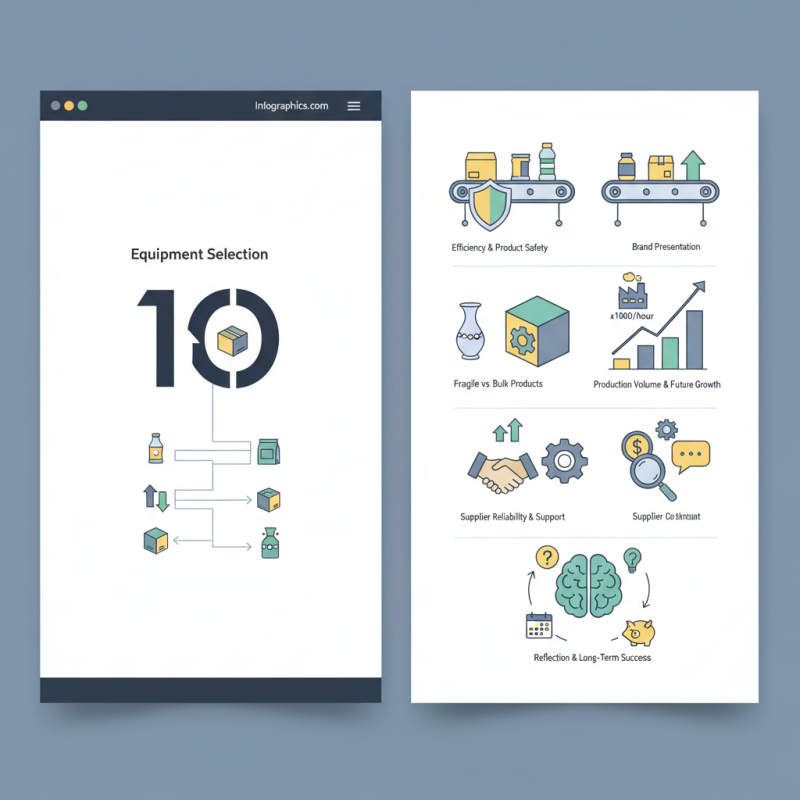
Choosing the right packaging equipment is vital for any business. It impacts efficiency, product safety, and brand presentation. This decision can be overwhelming due to the variety of options available. Understanding how to choose the right packaging equipment can streamline this process.

Consider your specific needs. Are you packaging fragile items or bulk products? Each type requires different machinery and materials. It's essential to assess your production volume too. The right equipment must meet your output demands. Think about future growth. Investing in versatile machinery can save costs in the long run.

Also, evaluate the reliability of suppliers. Research their experience and customer support services. A good supplier not only offers quality equipment but also stands behind their products. Reflecting on your choices can prevent costly mistakes. Taking time to gather information may seem tedious, but it’s crucial for long-term success.
10 Essential Tips to Choose the Right Packaging Equipment?

Understanding Your Packaging Needs Before Choosing Equipment

Choosing the right packaging equipment is crucial for any business. Understanding your specific packaging needs is the first step. Every industry has distinct requirements. For example, the food and beverage sector emphasizes food safety and compliance. According to a report by Grand View Research, the global food packaging equipment market is projected to reach $50 billion by 2025. This data highlights the growing importance of selecting appropriate equipment.

Identifying your product’s characteristics is vital. Is it fragile, perishable, or irregularly shaped? Each type requires unique solutions. Additionally, consider your production speed and volume. In a study by PMMI, 60% of companies reported that automation in packaging helped increase efficiency and reduce manual errors. This means understanding your operational pace is essential for selecting adequate machinery.

Finally, assess the flexibility of equipment. Can it adapt to changes in product types or sizes? In today's market, the need for agility is evident. Some companies may fall short, purchasing rigid systems that can’t keep up with evolving demands. Gaining insights into your packaging requirements will lead to better long-term investment and smoother operations.

Evaluating Different Types of Packaging Equipment Available

When evaluating different types of packaging equipment, it’s crucial to consider several factors. The packaging industry reported that nearly 30% of businesses face challenges selecting the right machinery. This highlights the importance of informed decision-making. Each type of packaging equipment serves specific functions and is vital in achieving operational efficiency.

For instance, flexible packaging machines cater to products requiring customized shapes and sizes. According to a recent study, flexible packaging accounts for over 25% of the total packaging market. This trend reflects shifting consumer preferences for convenience and sustainability. To select suitable equipment, analyze your product’s requirements, such as size, weight, and sensitivity.

Additionally, automation in packaging is reshaping the industry. Reports indicate that automated systems can enhance productivity by up to 50%. However, integrating complex machinery can pose challenges. Not every business is equipped to handle these advancements. You might need to consider your team's expertise when choosing automated solutions. Balancing innovation with operational capability helps avoid poor investment.

10 Essential Tips to Choose the Right Packaging Equipment

Tip Number Packaging Equipment Type Key Features Ideal Applications
1 Automatic Filling Machines High speed, consistent filling, adjustable settings Liquid products, powders, granular items
2 Labeling Machines Precision labeling, customizable label options Bottles, jars, boxes
3 Cartoning Machines Robust design, high capacity, easy integration Pharmaceuticals, food products, cosmetics
4 Shrink Wrapping Machines Versatile, compact design, energy-efficient Bundles, multi-packs, irregular shapes
5 Stretch Wrapping Machines Load stability, economic material usage, adjustable tension Pallet loads, heavy items, irregular shapes
6 Sealing Machines Fast sealing time, reliable performance, easy operation Bags, pouches, boxes
7 Case Packing Machines Efficiency, flexibility for different case sizes Food, beverages, household products
8 Bulk Bag Fillers High volume, low waste, various materials Granular products, powders, aggregates
9 Palletizing Systems Automated stacking, space-saving, integrated systems Warehouse operations, shipping preparations
10 Customized Packaging Solutions Tailored designs, specialized for product needs Unique products, niche markets, promotional items

Key Features to Consider in Packaging Equipment Selection

When selecting packaging equipment, understanding key features is vital. Efficiency remains a top priority for most manufacturers. According to a recent study by Smithers Pira, automation in packaging can enhance efficiency by up to 30%. Equipment that integrates seamlessly into your current production line will save time and resources.

Another essential consideration is the flexibility of the equipment. With the rise of e-commerce, companies must be able to accommodate various product sizes and packaging styles. A flexible system allows for quick adjustments, ensuring that packaging processes remain agile. Choosing equipment with modular components enables upgrades without complete replacements. Additionally, look for machinery that supports multiple packaging formats to adapt to future trends.

Reliability is often overlooked but is critical for consistent production. Malfunctioning equipment can lead to downtime, which can be costly. According to a report by Grand View Research, unplanned downtime costs manufacturers an estimated $50 billion each year. Investing in well-reviewed equipment with proven reliability can mitigate these risks, ensuring smoother operations. However, be mindful of the balance between high-tech features and user-friendly interfaces. Complex machinery may require extended training. Thus, it’s beneficial to weigh the learning curve against potential productivity gains.

Assessing Budget and Cost Efficiency for Packaging Solutions

When assessing budget and cost efficiency for packaging solutions, it's crucial to consider more than just the initial purchase price. Look into the long-term operational costs associated with each equipment option. Maintenance, energy consumption, and labor requirements can significantly impact your overall expenses. A lower upfront cost might lead to higher costs down the line due to frequent repairs or inefficiencies.

It's also helpful to engage with industry experts who can provide insights into the total cost of ownership. They may suggest solutions that appear more expensive initially but offer greater reliability and efficiency. Understanding total costs can make the decision-making process clearer. Gather data on various models and their performance metrics. Are there hidden costs that could affect your bottom line? Always consider the adaptability of the equipment. As your business grows, can this solution scale with you?

Exploring various financing options might also be beneficial. Leasing could lower initial costs, while outright purchases may bring long-term savings. Do thorough research. Comparing quotes and options can reveal unexpected price variations. This diligence can improve your spending strategy.

Seeking Expert Consultation and Supplier Recommendations

Choosing the right packaging equipment can be a daunting task. Consulting with experts is essential. They provide valuable insights tailored to your specific needs. Their experience often uncovers details you might overlook. For instance, they help identify the right machinery for your product’s size and weight.

Supplier recommendations also play a crucial role. Understanding the reputation of suppliers can save you time and money. You need to ask questions about their service and support. Inquire about their maintenance packages and response times. A reliable supplier will have positive client feedback. Taking the time to analyze supplier credentials is a smart move.

Exploring forums and industry networks can also yield valuable insights. Many share their successes and failures with different equipment. Reflecting on these experiences can aid your decision-making. Remember, even the best equipment won't perform well without proper handling. Consider training for your team, as this can impact productivity. Balancing equipment quality and team capability will lead to better outcomes.

FAQS

: Why is understanding my packaging needs important?

: It helps in selecting equipment suited to your product and operational demands.

What should I consider about my product characteristics?

Determine if it's fragile, perishable, or irregularly shaped to find the right packaging solution.

How does automation impact packaging efficiency?

Automation can enhance efficiency by up to 30%, reducing manual errors and improving production speed.

Why is flexibility in packaging equipment essential?

It allows adjustments for different product sizes and packaging styles, which is crucial in a fast-evolving market.

What risks are associated with unreliable packaging equipment?

Malfunctioning machines can lead to costly downtime, affecting production schedules and profitability.

How can expert consultations benefit my equipment selection?

Experts provide tailored insights, helping to identify the right machinery based on specific needs.

Why are supplier recommendations important?

They reveal the reputation of suppliers, saving you time and potentially avoiding poor service and support.

How can industry forums assist my decision-making?

These platforms offer shared experiences that highlight successes and failures with different machinery.

What role does team training play in equipment effectiveness?

Proper training ensures that your team can maximize equipment usage, impacting overall productivity.

How can I balance equipment quality with team capability?

Investing in both high-quality machinery and proper training will enhance overall operational outcomes.

Conclusion

Choosing the right packaging equipment is crucial for any business aiming to optimize efficiency and cost-effectiveness. Before diving into the selection process, it's important to thoroughly understand your packaging needs, as this will inform the type of equipment required. Evaluating the various types of packaging equipment available—such as fillers, sealers, and labelers—helps narrow down choices to those that best suit your operational requirements.

When considering how to choose the right packaging equipment, it's essential to assess key features, including speed, versatility, and ease of use. Additionally, evaluating your budget and considering cost efficiency will ensure that your investment aligns with your financial goals. Finally, seeking expert consultation and recommendations from suppliers can provide valuable insights, leading to informed decisions that enhance your packaging process. By following these essential tips, businesses can ensure they select the most effective packaging solutions tailored to their unique needs.

Sophia

Sophia

Sophia is a dedicated marketing professional with an exceptional depth of knowledge about her company's products and services. With a keen understanding of market trends and customer needs, she crafts insightful blog posts that not only inform but also engage readers, enriching the company’s online......